


How to ensure a silicone mobile phone case stays in place for extended use without affecting wireless charging?
Release Time : 2025-12-08
In today's world of smartphone accessories, where functionality and ease of use are increasingly prioritized, magnetic silicone mobile phone cases have become a popular choice due to their soft touch, comprehensive protection, and convenient magnetic attachment. However, reliably embedding a magnetic module within a fully enclosed silicone structure while ensuring it stays in place for extended periods without affecting wireless charging performance presents a comprehensive challenge integrating materials science, electromagnetic compatibility, and precision manufacturing. Its success relies on ingenious structural design, reliable packaging processes, and precise control over electromagnetic properties.
First, the method of embedding the magnetic module is fundamental to stability. Unlike simple adhesive or snap-on fasteners, high-end magnetic silicone cases typically employ "in-mold embedding" or "secondary injection molding" processes. During silicone molding, a pre-positioned magnet assembly is placed in a specific cavity of the mold. Liquid silicone then encapsulates and solidifies the magnet under high temperature and pressure, creating a mechanical interlock between the magnet and the silicone substrate. This integrated molding method avoids interface separation that may occur during later assembly, significantly improving bonding strength. Even after repeated bending, drops, or temperature changes, the magnet remains firmly locked inside the silicone, preventing it from loosening or shifting.
Secondly, to prevent oxidation, corrosion, or chemical reactions between the magnet and the silicone, the magnetic module itself undergoes multiple layers of encapsulation protection. Typically, the magnet is first coated with a metal layer such as nickel-copper-nickel, then fitted into a laser-welded stainless steel or non-magnetic alloy ring, forming a dense, sealed cavity. This "armor" not only isolates it from moisture and sweat but also effectively constrains the magnetic field direction, reducing stray magnetic flux. More importantly, the outer encapsulation material must be non-ferromagnetic and have low eddy current losses to avoid interfering with the normal penetration of the alternating magnetic field during wireless charging.
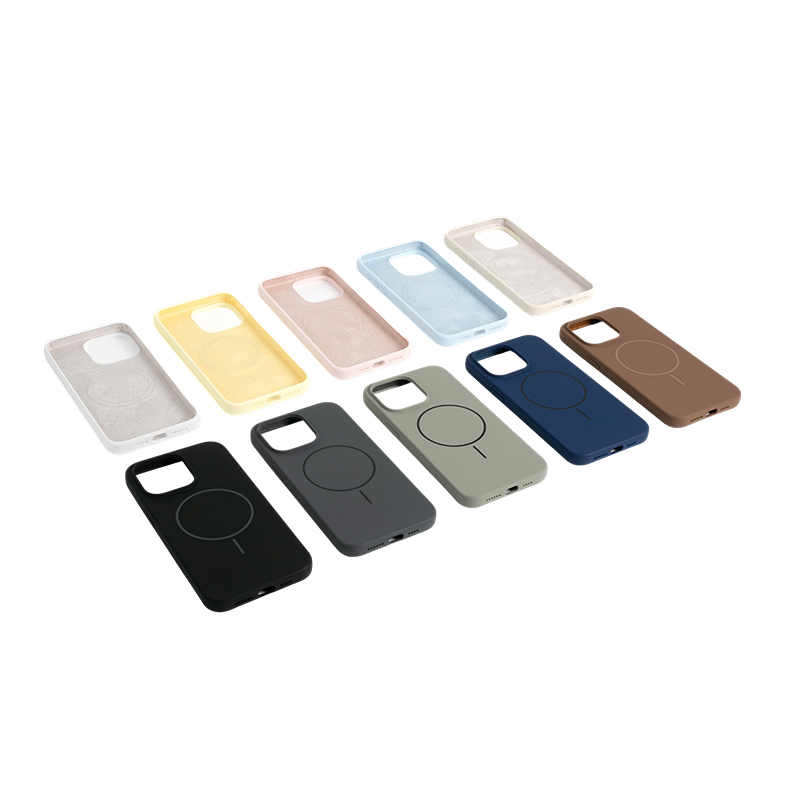
Regarding wireless charging compatibility, the key lies in the layout and material selection of the magnetic array. Modern magnetic phone cases often follow magnetic ecosystem standards (such as a ring arrangement), arranging multiple small magnets in a ring with specific polarities, providing uniform attraction while leaving a "clearance area" in the center. When the wireless charging coil is working, energy is primarily transferred through the non-magnetic area. The spacing and thickness of the surrounding magnets are precisely calculated to ensure their presence does not significantly weaken the magnetic field coupling efficiency. Furthermore, the use of high-resistivity magnetic materials (such as samarium cobalt or neodymium iron boron with a specific formulation) further suppresses eddy current heating, ensuring a safe and efficient charging process.
It's worth mentioning that the inherent magnetic permeability of silicone is also an advantage. As a non-metallic, non-conductive material, silicone offers virtually no shielding against electromagnetic fields. Therefore, even with full coverage, it does not obstruct wireless signals or the charging magnetic field. This allows designers to completely embed the magnetic module within the housing, eliminating the need for openings or exposure, maintaining a clean appearance while enhancing durability.
Finally, long-term reliability requires rigorous testing. This includes high-temperature and high-humidity aging, thermal cycling, repeated adsorption and disassembly, and wireless charging temperature rise testing to ensure that magnetic force attenuation remains within a reasonable range, the silicone does not crack, and the magnets do not shift. Only through systematic verification can the promise of a "durable, stable, and smooth charging" user experience be fulfilled.
In short, the ingenuity of the magnetic silicone phone case lies in its harmonious integration of rigid magnetic components and a soft silicone shell. Through unseen structural wisdom, it resolves the conflict between function and aesthetics, stability and convenience—ensuring peace of mind with every attachment, smooth charging, and comfortable grip. This perfectly embodies the modern consumer electronics accessory's philosophy of "invisible technology, visible experience."
First, the method of embedding the magnetic module is fundamental to stability. Unlike simple adhesive or snap-on fasteners, high-end magnetic silicone cases typically employ "in-mold embedding" or "secondary injection molding" processes. During silicone molding, a pre-positioned magnet assembly is placed in a specific cavity of the mold. Liquid silicone then encapsulates and solidifies the magnet under high temperature and pressure, creating a mechanical interlock between the magnet and the silicone substrate. This integrated molding method avoids interface separation that may occur during later assembly, significantly improving bonding strength. Even after repeated bending, drops, or temperature changes, the magnet remains firmly locked inside the silicone, preventing it from loosening or shifting.
Secondly, to prevent oxidation, corrosion, or chemical reactions between the magnet and the silicone, the magnetic module itself undergoes multiple layers of encapsulation protection. Typically, the magnet is first coated with a metal layer such as nickel-copper-nickel, then fitted into a laser-welded stainless steel or non-magnetic alloy ring, forming a dense, sealed cavity. This "armor" not only isolates it from moisture and sweat but also effectively constrains the magnetic field direction, reducing stray magnetic flux. More importantly, the outer encapsulation material must be non-ferromagnetic and have low eddy current losses to avoid interfering with the normal penetration of the alternating magnetic field during wireless charging.
Regarding wireless charging compatibility, the key lies in the layout and material selection of the magnetic array. Modern magnetic phone cases often follow magnetic ecosystem standards (such as a ring arrangement), arranging multiple small magnets in a ring with specific polarities, providing uniform attraction while leaving a "clearance area" in the center. When the wireless charging coil is working, energy is primarily transferred through the non-magnetic area. The spacing and thickness of the surrounding magnets are precisely calculated to ensure their presence does not significantly weaken the magnetic field coupling efficiency. Furthermore, the use of high-resistivity magnetic materials (such as samarium cobalt or neodymium iron boron with a specific formulation) further suppresses eddy current heating, ensuring a safe and efficient charging process.
It's worth mentioning that the inherent magnetic permeability of silicone is also an advantage. As a non-metallic, non-conductive material, silicone offers virtually no shielding against electromagnetic fields. Therefore, even with full coverage, it does not obstruct wireless signals or the charging magnetic field. This allows designers to completely embed the magnetic module within the housing, eliminating the need for openings or exposure, maintaining a clean appearance while enhancing durability.
Finally, long-term reliability requires rigorous testing. This includes high-temperature and high-humidity aging, thermal cycling, repeated adsorption and disassembly, and wireless charging temperature rise testing to ensure that magnetic force attenuation remains within a reasonable range, the silicone does not crack, and the magnets do not shift. Only through systematic verification can the promise of a "durable, stable, and smooth charging" user experience be fulfilled.
In short, the ingenuity of the magnetic silicone phone case lies in its harmonious integration of rigid magnetic components and a soft silicone shell. Through unseen structural wisdom, it resolves the conflict between function and aesthetics, stability and convenience—ensuring peace of mind with every attachment, smooth charging, and comfortable grip. This perfectly embodies the modern consumer electronics accessory's philosophy of "invisible technology, visible experience."