
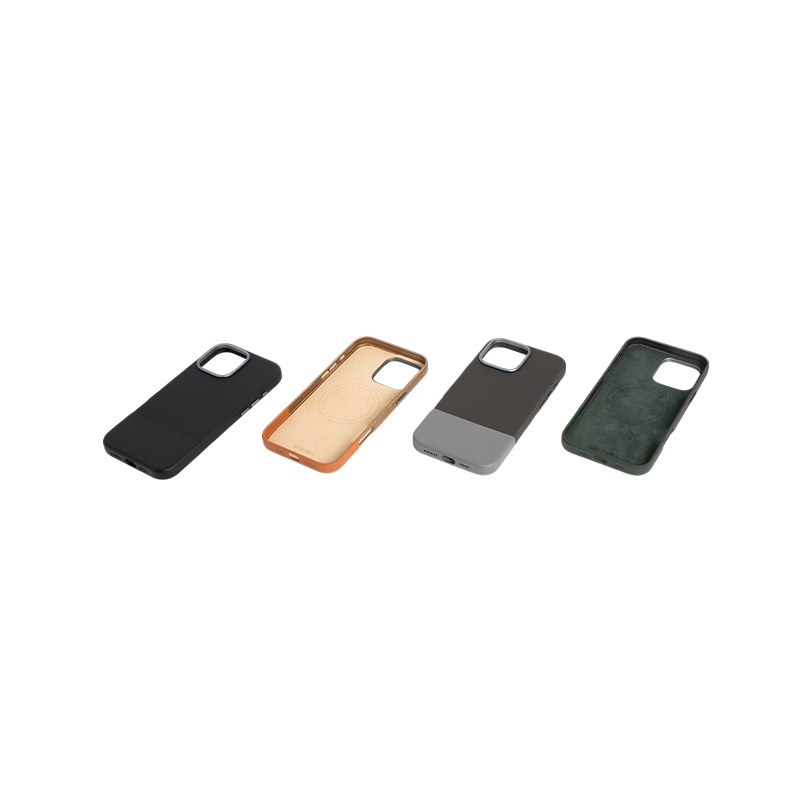
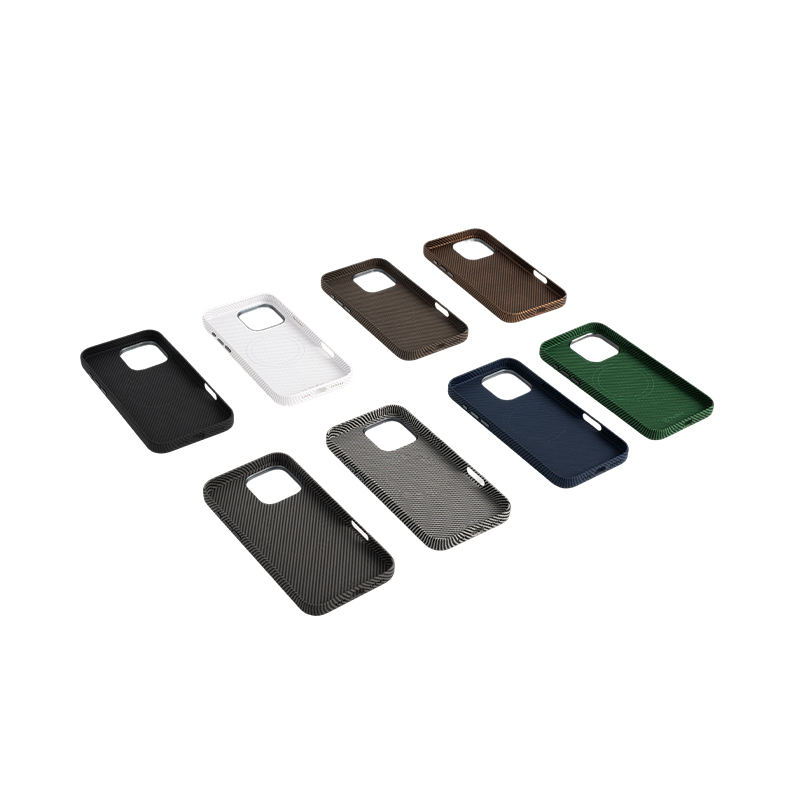
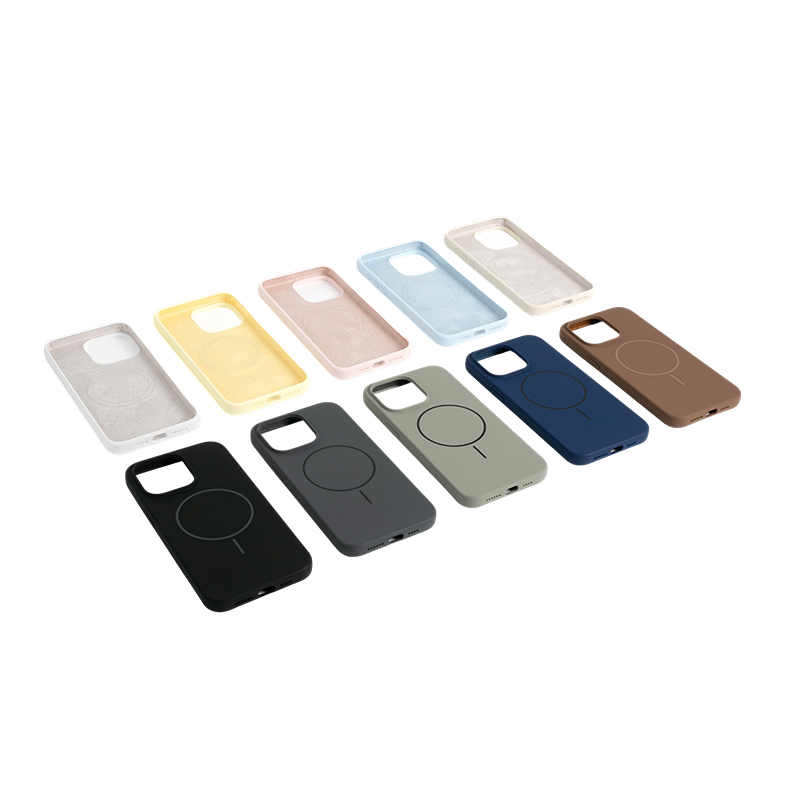
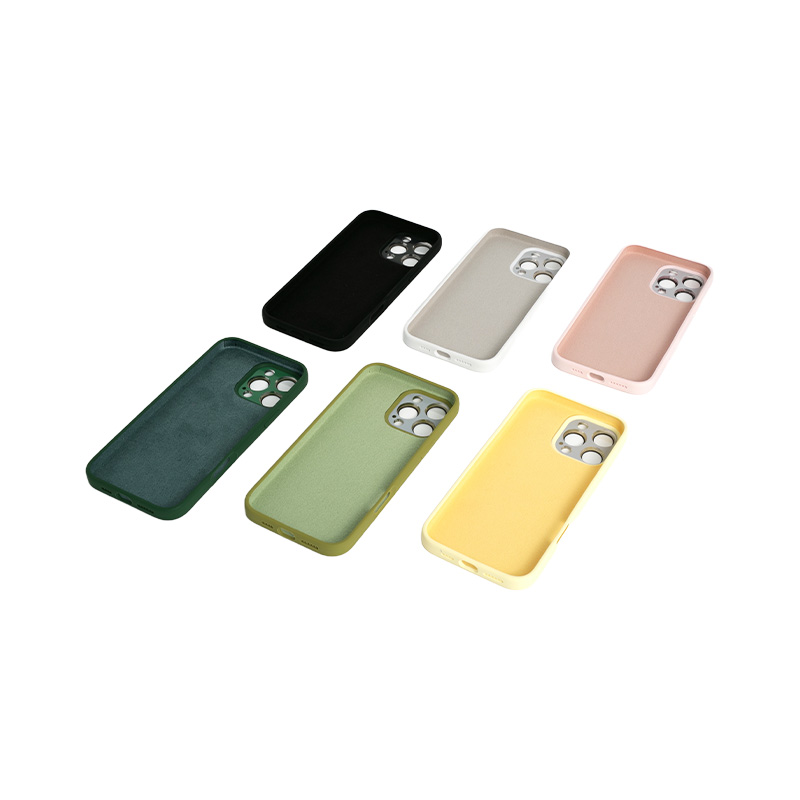


How does the Apple iPhone mobile phone case protective case achieve comprehensive drop protection while ensuring uninterrupted signal transmission and wireless charging?
Release Time : 2026-02-27
In today's highly integrated smartphone world, the iPhone is not only a communication tool but also an extension of our lives. Users' expectations for phone cases have long surpassed simple decoration, now seeking ultimate safety with "360-degree drop protection." However, physics seems to play a trick: heavy protection often means signal shielding, especially the blocking of electromagnetic waves by metal materials and the attenuation of wireless charging by excessively thick media. The Apple iPhone mobile phone case protective case successfully solves this problem through breakthroughs in materials science, ingenious structural mechanics design, and deep optimization of electromagnetic compatibility, achieving a perfect coexistence of safety protection and signal transparency.
1. Materials Revolution: Selection of Non-metallic Materials and Optimization of Dielectric Constant
To achieve drop protection without blocking signals, the primary principle is "de-metallization." While traditional metal frames are sturdy, they create a "Faraday cage" effect, completely blocking cellular network, Wi-Fi, and Bluetooth signals, and generating eddy currents that cause wireless charging to fail. These materials not only possess excellent toughness, absorbing drop impacts, but more importantly, they have extremely low dielectric constants and dielectric losses. This means electromagnetic waves can penetrate the casing almost unimpeded, just like light passes through glass.
2. Structural Intelligence: Airbag Cushioning and Zero-Distance Wireless Charging
The core of drop protection lies in absorbing kinetic energy, while the core of wireless charging lies in "distance." According to the principle of electromagnetic induction, for every 1 millimeter increase in the distance between charging coils, charging efficiency decreases significantly; excessive thickness prevents charging altogether. Traditional thickened drop-proof cases often sacrifice charging functionality due to overall thickness. Modern solutions employ a "localized reinforcement" structural strategy. Engineers have built independent "airbag cushioning structures" or microporous shock-absorbing materials into the four corners of the phone case. When the phone is dropped, the airbags at the corners compress instantly, like seatbelt pretensioners in a car, distributing the impact force throughout the casing, thus protecting the screen and motherboard. Meanwhile, in the center area of the phone's back, corresponding to the wireless charging coil, the thickness is strictly controlled, even employing high-precision injection molding to achieve a "zero-gap" fit.
3. Refined Details: Antenna Window Design and Signal Overflow Channels
Beyond materials and overall structure, microscopic details also determine success or failure. iPhone antenna bands are typically located at the top, bottom, or sides of the device. Excellent protective case design teams use 3D scanning and RF testing to precisely locate these signal overflow windows. In these critical areas, the protective case employs "hollowed-out design" or "signal-enhancing ribs" technology. Hollowed-out designs directly remove material obstructing the antenna, leaving a dedicated channel for the signal; while signal-enhancing ribs utilize a specific shaped ridge structure to guide electromagnetic waves in a directional radiation, reducing scattering loss.
In conclusion, the Apple iPhone mobile phone case protective case is far more than a simple plastic wrapping; it's a culmination of materials science, structural mechanics, and electromagnetics. By using high-transmittance non-metallic composite materials, employing differentiated structural designs with four corner airbags and a thinner back, and precisely optimizing the antenna window, it successfully breaks the "drop protection inevitably blocks signal" myth.
1. Materials Revolution: Selection of Non-metallic Materials and Optimization of Dielectric Constant
To achieve drop protection without blocking signals, the primary principle is "de-metallization." While traditional metal frames are sturdy, they create a "Faraday cage" effect, completely blocking cellular network, Wi-Fi, and Bluetooth signals, and generating eddy currents that cause wireless charging to fail. These materials not only possess excellent toughness, absorbing drop impacts, but more importantly, they have extremely low dielectric constants and dielectric losses. This means electromagnetic waves can penetrate the casing almost unimpeded, just like light passes through glass.
2. Structural Intelligence: Airbag Cushioning and Zero-Distance Wireless Charging
The core of drop protection lies in absorbing kinetic energy, while the core of wireless charging lies in "distance." According to the principle of electromagnetic induction, for every 1 millimeter increase in the distance between charging coils, charging efficiency decreases significantly; excessive thickness prevents charging altogether. Traditional thickened drop-proof cases often sacrifice charging functionality due to overall thickness. Modern solutions employ a "localized reinforcement" structural strategy. Engineers have built independent "airbag cushioning structures" or microporous shock-absorbing materials into the four corners of the phone case. When the phone is dropped, the airbags at the corners compress instantly, like seatbelt pretensioners in a car, distributing the impact force throughout the casing, thus protecting the screen and motherboard. Meanwhile, in the center area of the phone's back, corresponding to the wireless charging coil, the thickness is strictly controlled, even employing high-precision injection molding to achieve a "zero-gap" fit.
3. Refined Details: Antenna Window Design and Signal Overflow Channels
Beyond materials and overall structure, microscopic details also determine success or failure. iPhone antenna bands are typically located at the top, bottom, or sides of the device. Excellent protective case design teams use 3D scanning and RF testing to precisely locate these signal overflow windows. In these critical areas, the protective case employs "hollowed-out design" or "signal-enhancing ribs" technology. Hollowed-out designs directly remove material obstructing the antenna, leaving a dedicated channel for the signal; while signal-enhancing ribs utilize a specific shaped ridge structure to guide electromagnetic waves in a directional radiation, reducing scattering loss.
In conclusion, the Apple iPhone mobile phone case protective case is far more than a simple plastic wrapping; it's a culmination of materials science, structural mechanics, and electromagnetics. By using high-transmittance non-metallic composite materials, employing differentiated structural designs with four corner airbags and a thinner back, and precisely optimizing the antenna window, it successfully breaks the "drop protection inevitably blocks signal" myth.